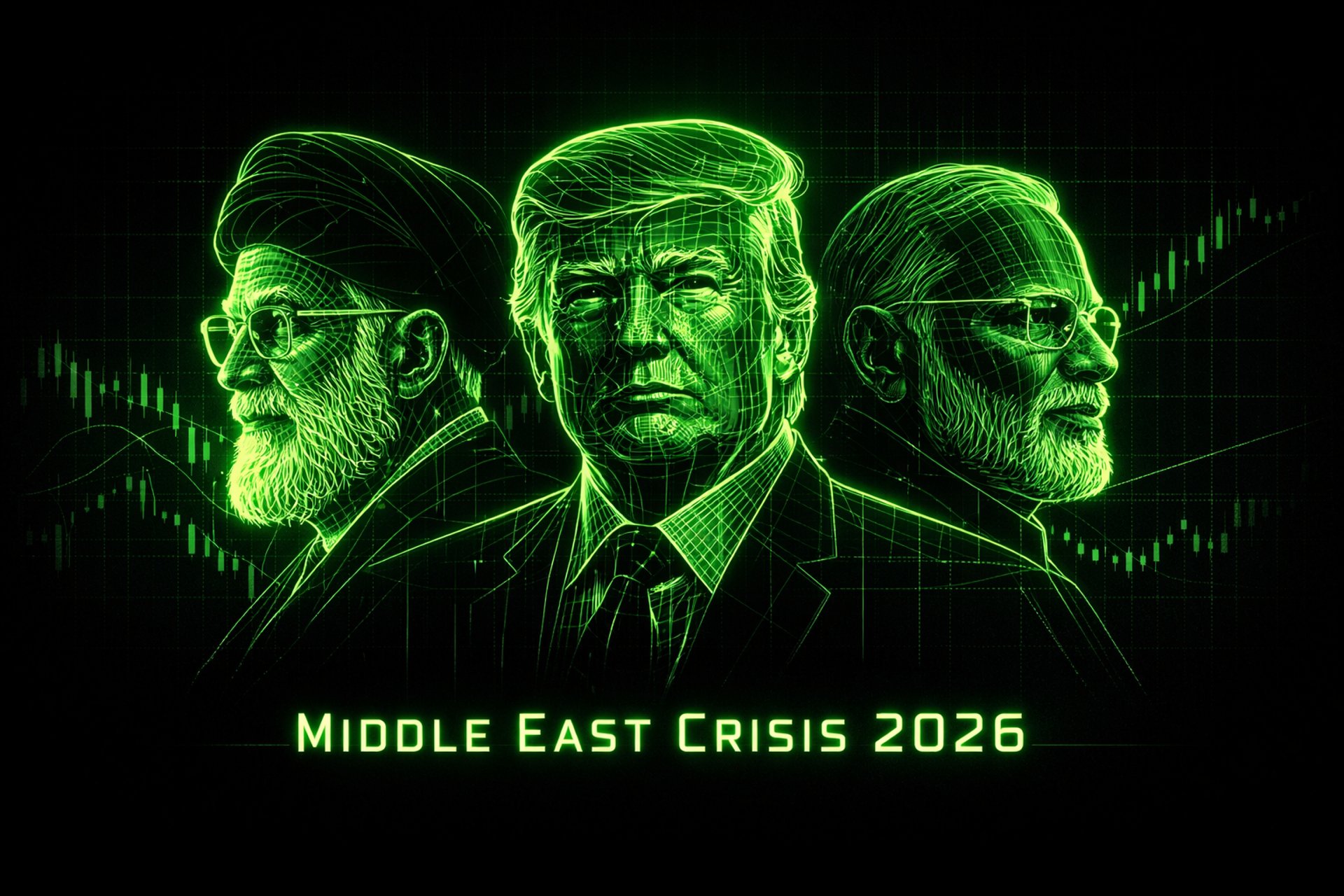
Middle East Crisis 2026: Deep Analysis of the Impact on the Indian Stock Market and 5 Key Stocks to Watch
Global markets are once again facing volatility due to rising geopolitical tensions in the Middle East. Conflicts involving Iran, Israel, and the United States have created uncertainty around global oil supply, triggering sharp movements in crude oil prices, currencies, and stock markets worldwide. For India, the impact is even more significant. As one of the largest oil-importing nations in the world, any disruption in the Middle East directly affects India's economy, inflation, and financial markets. In this article, we will analyze: What is happening in the Middle East right now Why crude oil is the biggest risk for India The macroeconomic impact on India Which sectors will benefit or suffer 5 stocks investors should watch during the crisis
DEV
3/6/20234 min read
Understanding the Current Middle East Crisis
The recent escalation in the Middle East has significantly disrupted global energy markets. Attacks on oil infrastructure and transportation routes have increased fears of supply shortages and shipping disruptions.
A major concern is the Strait of Hormuz, one of the most important energy shipping routes in the world. Nearly 25% of global seaborne oil shipments pass through this narrow waterway, making it a critical chokepoint for global energy trade.
Due to military tensions in the region, oil shipments through this route have been disrupted, leading to supply constraints and price spikes in global energy markets.
As a result:
Brent crude prices have surged close to $100 per barrel
Global markets have turned volatile
Emerging markets like India are facing pressure from rising import costs
Why the Middle East Matters So Much for India
India is heavily dependent on imported crude oil. Currently, the country imports over 85–88% of its total crude oil requirements.
This makes India extremely vulnerable to geopolitical disruptions in the Middle East.
A simple rule explains the risk:
Every $1 increase in crude oil raises India’s annual import bill by roughly $2 billion.
If oil prices rise sharply, the impact spreads across the entire economy.
Transmission Mechanism: How War Impacts the Indian Stock Market
Geopolitical conflicts affect markets through multiple economic channels.
1. Crude Oil Price Shock
When oil prices rise sharply:
Transportation costs increase
Manufacturing costs rise
Logistics and supply chains become expensive
Analysts warn that if crude oil prices sustain above $100 per barrel, it could significantly slow economic growth and increase inflation across Asia, including India.
2. Rising Inflation in India
Oil is a core input for multiple sectors:
Transportation
Aviation
Chemicals
Paints
Plastics
FMCG logistics
Higher oil prices increase production and transportation costs, which companies often pass on to consumers.
This leads to cost-push inflation across the economy.
3. Rupee Weakness
Higher oil imports require more US dollars.
As demand for dollars increases:
The rupee weakens
Imported goods become more expensive
Inflation increases further
In fact, the Indian rupee recently touched a record low against the US dollar as oil prices surged due to the Middle East conflict.
4. Pressure on Corporate Earnings
Higher oil prices can reduce profit margins in many industries.
Industries most affected include:
Aviation
Paint companies
Chemicals
Logistics companies
FMCG companies
These sectors rely heavily on petroleum-based inputs or transportation costs.
5. Foreign Investor Outflows
During geopolitical crises, global investors usually move their money toward safer assets such as:
US treasury bonds
Gold
Safe-haven currencies
This leads to Foreign Institutional Investors (FIIs) withdrawing money from emerging markets, creating volatility in markets like India.
Impact on the Indian Stock Market
The Indian stock market has already reacted to the crisis with increased volatility.
Rising oil prices and geopolitical uncertainty triggered selling pressure in equity markets, pushing benchmark indices like the Sensex and Nifty lower during several sessions.
Market reactions typically follow three phases during geopolitical conflicts:
1️⃣ Immediate panic selling
2️⃣ Sector rotation into energy and defence stocks
3️⃣ Gradual stabilization once uncertainty reduces
Historically, most geopolitical shocks create short-term volatility rather than long-term structural damage to markets.
Sector-Wise Winners and Losers
Understanding sector impact is key for investors.
Sectors Likely to Benefit
Oil Exploration Companies
Upstream oil companies benefit when crude prices rise because they sell oil at higher prices.
Defence Companies
Geopolitical tensions usually increase defence spending worldwide.
Energy Infrastructure
Companies involved in LNG and gas transportation may benefit from supply diversification.
Sectors Likely to Suffer
Aviation
Fuel accounts for 35–45% of airline operating costs.
Paint Companies
Paint manufacturers use crude-derived chemicals.
FMCG Companies
Higher transportation costs reduce margins.
Chemical Companies
Petrochemical feedstocks become expensive.
5 Stocks to Watch During the Middle East Crisis
Here are five stocks that investors should monitor closely during the current geopolitical situation.
1. Reliance Industries
Reliance is one of India's largest energy and refining companies.
Key reasons to watch:
Large refining capacity
Strong petrochemical integration
Exposure to global energy markets
Higher refining margins during energy disruptions can benefit the company.
2. ONGC (Oil and Natural Gas Corporation)
ONGC is India's largest oil exploration company.
Why it matters:
Direct beneficiary of higher crude oil prices
Strong upstream production exposure
Strategic importance for India's energy security
When oil prices rise, upstream companies like ONGC often see earnings improvement.
3. GAIL India
GAIL is India's largest natural gas transmission and distribution company.
Why investors are watching it:
Increasing demand for cleaner fuels
LNG infrastructure expansion
Potential shift from oil to gas during energy shocks
4. Bharat Electronics (BEL)
BEL is one of India's largest defence electronics manufacturers.
Key growth drivers:
Rising defence spending
Increasing geopolitical tensions
Strong government order book
Defence stocks typically outperform during geopolitical conflicts.
5. Hindustan Aeronautics Limited (HAL)
HAL plays a critical role in India's defence ecosystem.
Key reasons to track:
Fighter jet manufacturing
Defence exports
Large order pipeline from the Indian government
Defence modernization programs make HAL a long-term structural story.
Key Indicators Investors Should Monitor
Investors should track these indicators closely in the coming weeks:
Crude Oil Price
The most important indicator for Indian markets.
Key levels to watch:
$90 per barrel → manageable
$100 per barrel → inflation risk
$120+ per barrel → economic slowdown risk
USD/INR Exchange Rate
Rupee depreciation signals stress in the economy.
Foreign Institutional Investor (FII) Flows
Large outflows could increase market volatility.
Inflation Data
Higher fuel prices may push inflation higher.
Long-Term Perspective: Should Investors Worry?
History shows that geopolitical crises often cause temporary market corrections, but rarely change long-term economic growth trends.
Examples include:
Gulf War
Russia–Ukraine conflict
Israel–Hamas tensions
In most cases, markets eventually recover once uncertainty decreases.
For long-term investors, such periods often create opportunities to accumulate fundamentally strong companies at lower valuations.
Conclusion
The Middle East crisis has once again highlighted the deep connection between geopolitics and financial markets.
For India, the biggest risk comes from rising crude oil prices and supply disruptions in the Persian Gulf.
While short-term volatility in the stock market is likely, investors should focus on:
Sector rotation opportunities
Strong companies with pricing power
Long-term macro trends
In uncertain times, disciplined investing and macro awareness become even more important.
Disclaimer
This article is for educational and informational purposes only. It should not be considered financial or investment advice. Stock market investments are subject to market risks. Readers should conduct their own research or consult a SEBI-registered financial advisor before making any investment decisions. The author and STOCK SPHERE are not responsible for any financial losses resulting from decisions based on this article.